
Why Do Greyhounds Make Greyt Pets?
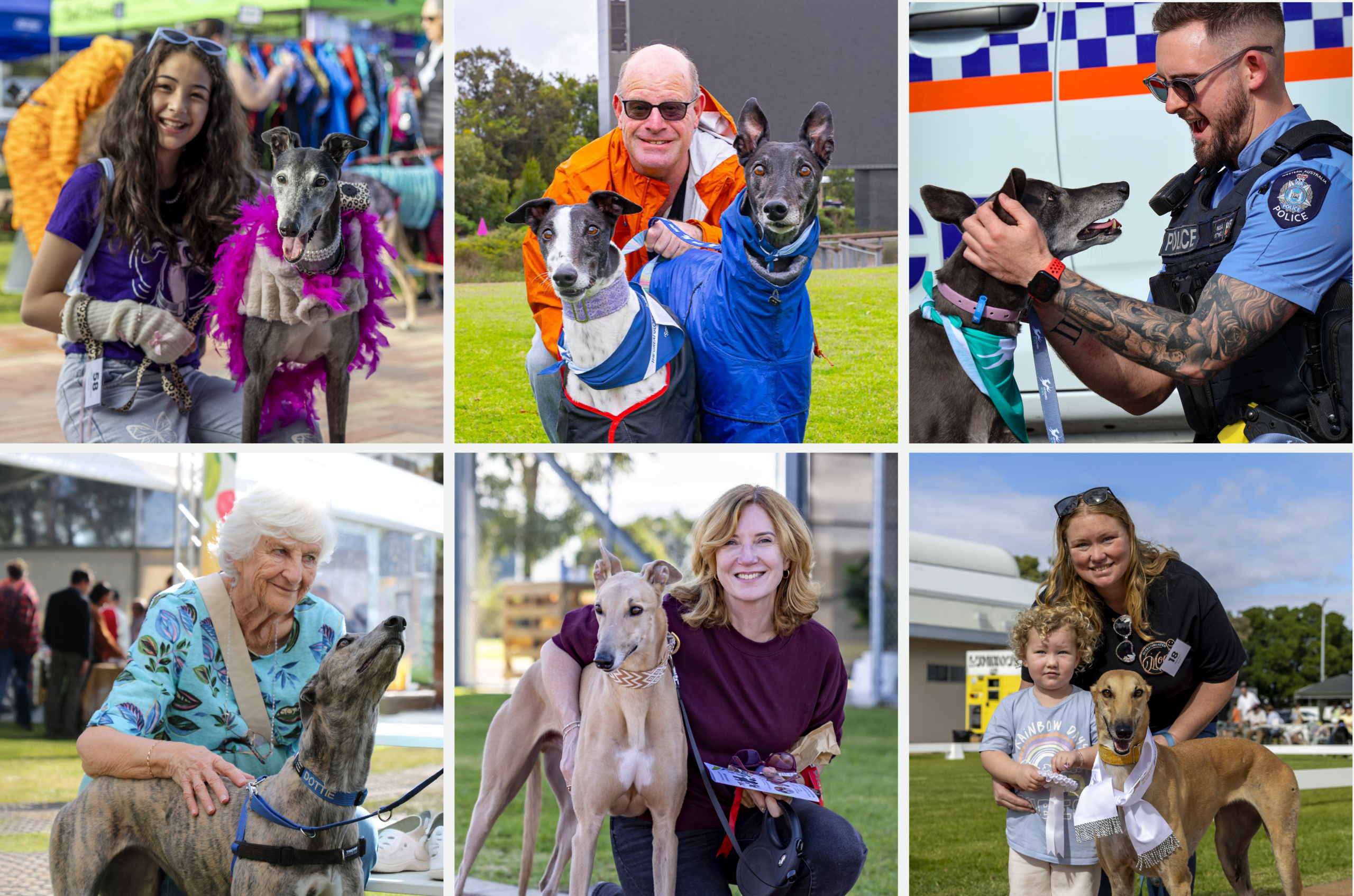
Greyhounds are unique and adaptable companions that suit a wide range of households and lifestyles. With their sweet nature, low-maintenance grooming needs, minimal health concerns and easy-going temperament, greyhounds can be a wonderful choice for a first dog or a fiftieth.
Whether you’re in a busy family home, a quiet rural setting, or an apartment, there’s likely a greyhound that will fit right into your life.
These human-oriented dogs are just as content keeping a solo human company as they are being part of a family.
Greyhounds are known for their calm and relaxed nature, often sleeping up to 16 to 20 hours a day. When they are awake, they generally only need a short daily walk (around 20 minutes) before settling back into a comfy spot for another nap.
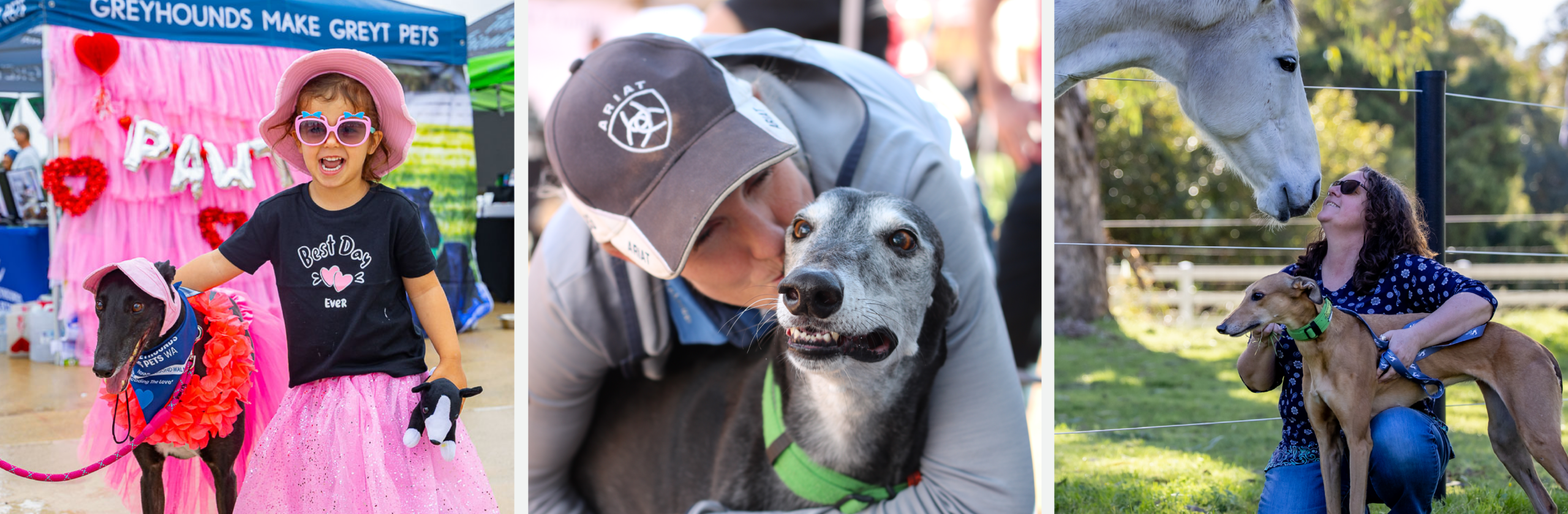
While greyhounds make fantastic family dogs, we always recommend that children are never left unsupervised around any dog. Helping children learn how to respectfully interact, play, and take part in everyday routines (like feeding and grooming) creates a safe, positive environment for everyone. With the right guidance, greyhounds can form lovely bonds with children.
Many greyhounds can also learn to live alongside other animals. We’ve seen plenty successfully join homes with horses, cows, free-roaming chooks and even cats. Every greyhound in our care is individually assessed for their sociability, temperament and ability to spend time alone, so we can match them to the most suitable home environment.
Greyhounds are required to be on a leash in public areas under Western Australian Legislation , including off-leash areas such as enclosed dog parks and beaches. Learn more here.
Want to know what makes adopting through GAPWA so special? Learn more about our program and the support we offer adopters here.
Common Myths About Greyhounds
Myth: Greyhounds need lots of space and exercise.
Greyhounds may be built for speed but they’re known for being low energy and lazy hounds . One or two 15-20 minute walks is enough for most. They’re then more than happy to snooze the day away in a comfy dog bed. They adapt well to small homes and apartments and don’t need a backyard to thrive.
Myth: Greyhounds aren’t good with small dogs.
Like all breeds, greyhounds have individual personalities and varying levels of sociability. Some are playful and outgoing, while others are more reserved. However, greyhounds as a breed are generally calm and tolerant towards other dogs. All greyhounds in our program are assessed for their behaviour around small breeds, and many live happily alongside smaller canine companions.
Myth: Greyhounds can’t live with cats.
While some greyhounds may not be suitable, others are very tolerant and can live peacefully with feline housemates. We assess each greyhound’s suitability to be placed in cat-friendly homes.
Myth: Greyhounds must be muzzled in public.
Greyhounds no longer need to be muzzled in public in Western Australia. However, they are still legally required to be on a leash at all times when in public spaces, including at off-leash dog parks and dog beaches.
Myth: Greyhounds aren’t family dogs.
Greyhounds are incredibly people-oriented and thrive on being part of a family (of any size). Many have been successfully rehomed into families with children of all ages, where they settle in as loveable and social companions.
As with any dog, it’s important that children are taught how to interact respectfully, helping create a safe and positive environment for both the dog and the family.